ProjectsProgram
NOVA: a 360-degree vision-assisted mobile robot for nighttime environments (LEADING EDGE Shikoku)
Night-vision mobile-robot project selected for LEADING EDGE Shikoku (METI AKATSUKI); it produced the XCR method and a presentation trip to Singapore
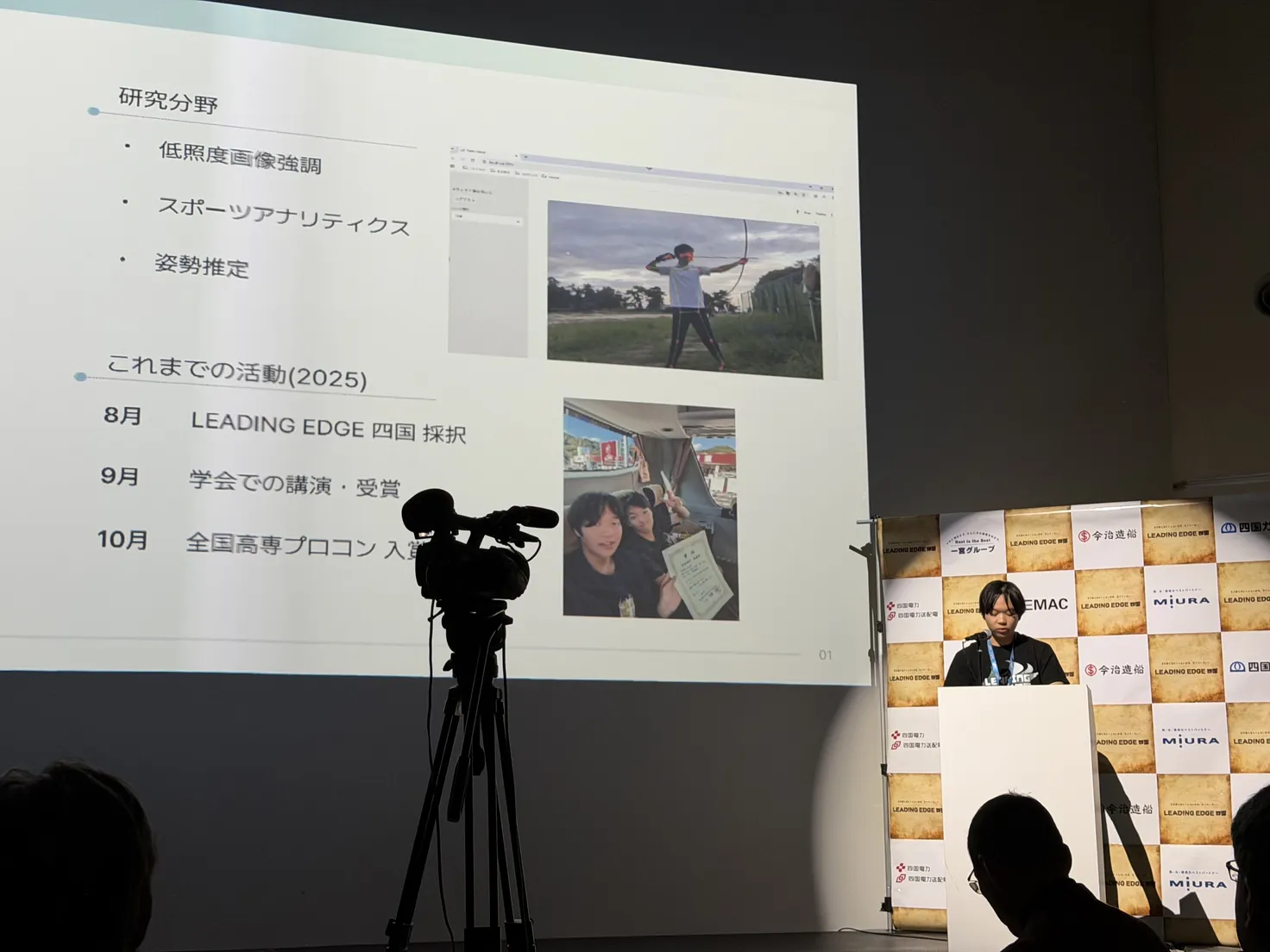
In August 2025 I was selected as a creator in LEADING EDGE Shikoku, a program under the Ministry of Economy, Trade and Industry’s AKATSUKI Project, with the theme “development of a 360-degree vision-assisted mobile robot specialized for nighttime environments.” The project was NOVA (Nighttime Observer for Visual Assurance).
The proposal
At the public screening I pitched a ground robot: a Raspberry Pi 5, an Insta360 Air camera and a PiCar-X chassis, from about 50,000 yen in parts, running three Python modules for control, image processing and notification. The argument was cost. The ultra-high-sensitivity and infrared cameras used for night inspection start at several hundred thousand yen, and I wanted software to do that work instead.
The pivot
The summer camp changed the plan. The target moved from construction sites to disaster sites, and the platform changed from a ground robot to a drone that could move freely over a site. In October, after a two-day course, I passed the practical exam for Japan’s Class 2 unmanned aircraft pilot qualification.
A generic deep-learning enhancer gave way to my own Retinex method, FSSR, and then to XCR (eXponential-Cos Retinex); both appeared as Jxiv preprints in November 2025. On five still images XCR reached a PSNR of 14.77 dB against 5.69 dB for MSR and 5.06 dB for a LIME-type method, with the highest SSIM of the three, and over 1,000 frames of 1920×1080 video it averaged 15.32 frames per second on a Snapdragon X CPU alone. I reported the SSIM and speed figures at the program’s interim report.
Singapore
The program’s overseas training took me to Singapore in November 2025, my first flight and first time abroad, to present NOVA in English at NUS, BLOCK71 and IPI Singapore. A security researcher there cared more about the formula than the app, suggested it might have uses beyond image processing, and asked what I planned to do with it beyond publishing. Nobody had asked me that before. I also learned how little English I could speak.
The final report
With a month left I changed the deliverable to an Android tablet app, trading processing speed for availability. It takes a USB camera feed, applies XCR live behind a toggle, and can take screenshots, record and save video; in the demo, hand keypoints were detected on a nearly black frame. I presented it at the final report on January 31, 2026. The instability I later found in XCR led to SD-Retinex, and SD-Retinex to Beacon.
Photos

The original NOVA pitch at the public screening: a ground robot for night inspection 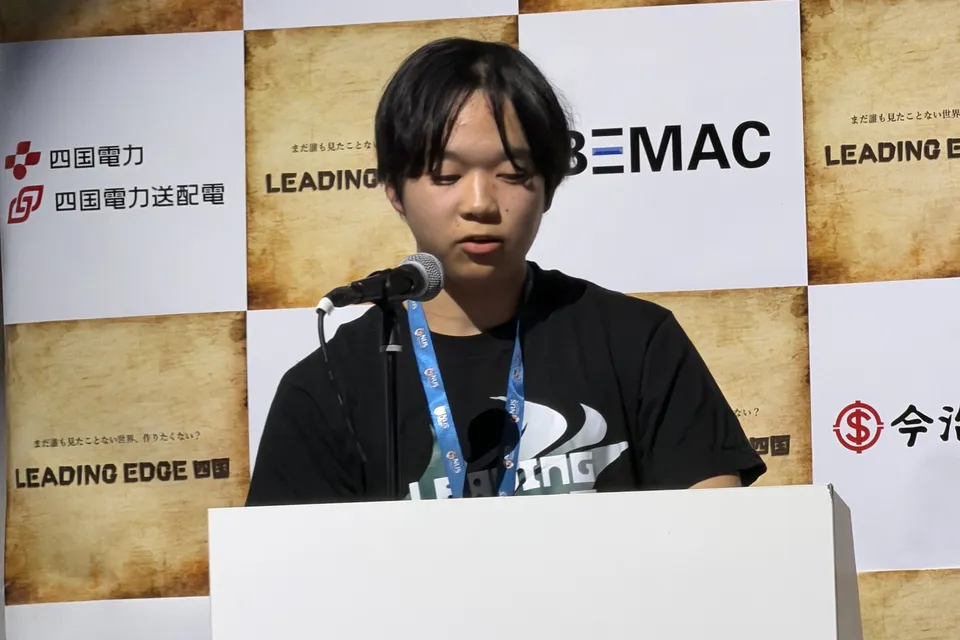
At the podium, LEADING EDGE Shikoku 
Overseas training in Singapore, November 2025: at the #NUS sign 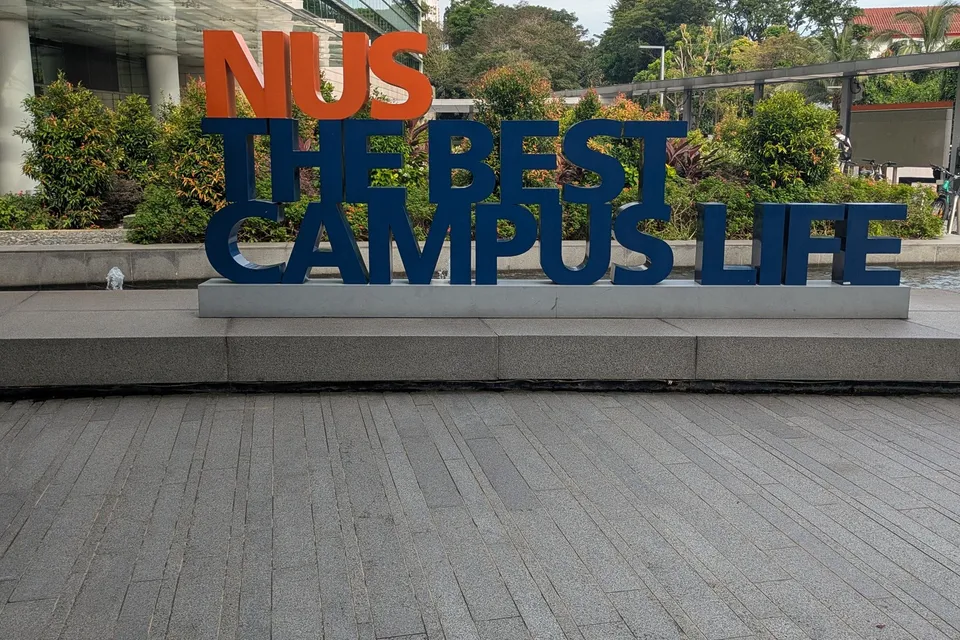
NUS campus, November 2025 
Marina Bay, Singapore, November 2025
Underlying research
A High-Speed and Structure-Preserving Retinex Method Based on a Complex Exponential Kernel: XCR
A training-free Retinex method whose off-center kernel, derived from a complex exponential, beats MSR and a LIME-based method on SSIM at 15 FPS (1080p) on a CPU